The Hidden Geometry Behind Successful Shoe Patterns

The Hidden Geometry Behind Successful Shoe Patterns
Category: Shoe Design Tutorials
Tags: shoe pattern making, footwear design, pattern drafting, shoe design book, how to make shoe patterns
📐 Introduction
Great shoe patterns are not created by intuition alone.
Behind every successful pattern lies hidden geometry.
Most beginners focus on outlines.
Professionals understand relationships, angles, proportions, and reference systems.
In this article, we’ll explore the geometric thinking that separates average shoe patterns from truly professional ones.
🧠 1. Shoe Patterns Are Geometric Systems
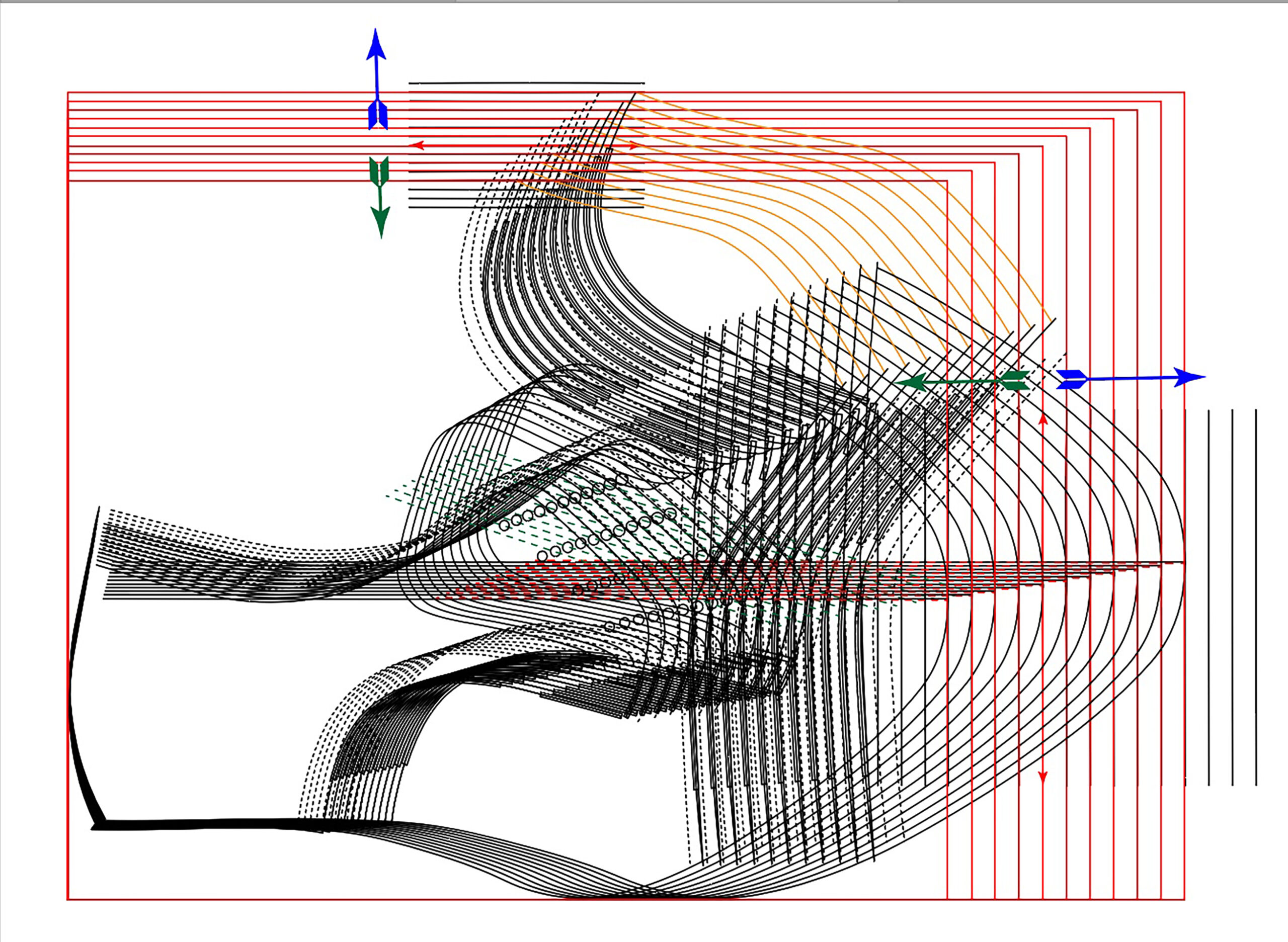
A shoe pattern is not a collection of random curves.
It is a system based on:
- reference axes
- balance points
- proportional distances
- directional flow
When geometry is wrong, no amount of adjustment will fully fix the pattern.
📏 2. Understanding Primary and Secondary Reference Lines
Professionals always work with:
- center lines
- balance lines
- construction axes
These lines:
- control symmetry
- guide volume placement
- keep proportions stable
Without references, patterns drift.
🔺 3. Angles Matter More Than Lengths
Many problems come from incorrect angles, not incorrect sizes.
Professionals analyze:
- topline angles
- vamp entry angles
- heel seat angles
A 1–2° error can cause visible distortion.
🧵 4. Curves Are Controlled, Not Decorative
Professional curves:
- connect reference points
- follow tension paths
- respect material behavior
Random curves create random problems.
👞 5. Geometry Creates Consistency Across Sizes
Correct geometry allows:
- stable grading
- predictable fit
- repeatable production
This is why professional patterns scale successfully — amateurs’ patterns do not.
📘 Want to Understand Shoe Pattern Geometry in Depth?
In “THE ART OF SHOE DESIGN”, I explain:
- geometric construction principles
- reference systems used by professionals
- how to correct geometric errors
- real-world pattern examples
All built on 40 years of practical experience.
E-mail: doukakisvangelis@gmail.com
Want to learn more? Check out my previous postshttps://doukakis-vangelis.com/how-traditional-pattern-making-shapes-modern-footwear-design/ https://doukakis-vangelis.com/want-to-learn-how-to-create-professional-level-accurate-patterns/ https://doukakis-vangelis.com/essential-tools-for-footwear-pattern-design/
📝 Final Thoughts
When geometry is right, everything becomes easier.
Fit improves.
Grading stabilizes.
Production succeeds.
Geometry is the silent foundation of professional shoe patterns.